BYD Introduces Second-Generation Blade Battery with Ultra-Fast Flash Charging



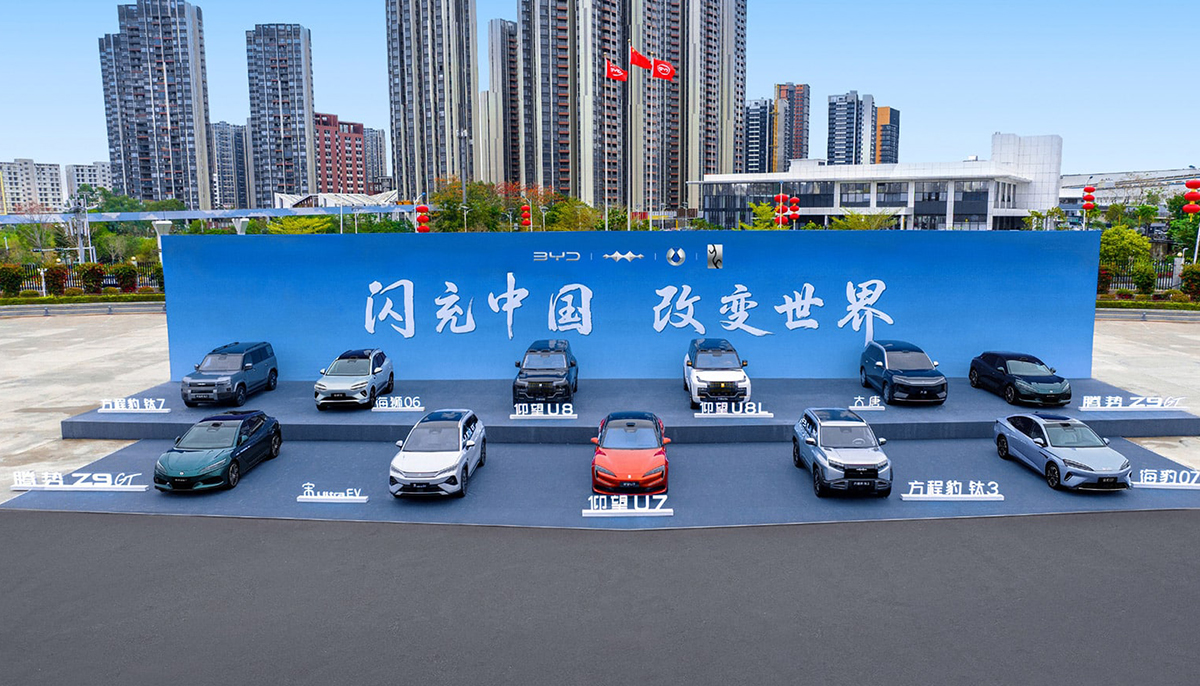
BYD, the world’s largest electric vehicle manufacturer, has introduced the second generation of its Blade Battery, alongside a new Flash Charging system designed to dramatically cut charging times while improving efficiency, durability and safety.


The headline feature of the new battery technology is its charging speed. According to BYD, the updated Blade Battery can charge from 10% to 70% in just five minutes, while reaching 97% in approximately nine minutes. The company refers to this rapid charging capability as “flash charging”.

Performance in extreme temperatures has also been improved. Even after exposure to very cold conditions, the battery maintains strong charging efficiency.
At −20°C, it can charge from 20% to 97% in around 12 minutes, and at −30°C it requires roughly the same time, only slightly longer than under normal temperature conditions. BYD says vehicles equipped with the battery can also charge 30–50% faster than many existing EVs when connected to standard public charging stations.

The Blade Battery, first introduced in 2020, uses lithium-iron-phosphate (LFP) chemistry and is known for its long, slim cell design that resembles a sword blade. This form factor allows the cells to be integrated directly into the battery pack using cell-to-pack (CtP) or cell-to-body (CtB) architecture, eliminating traditional modules and improving overall structural efficiency.
In the second-generation design, BYD appears to have reoriented the cells longitudinally within the battery pack while maintaining its module-free structure. The company says this configuration helps increase energy density at the pack level.
Energy density itself has improved by more than five percent compared with the first-generation Blade Battery, allowing vehicles to achieve longer driving ranges. The battery is also engineered for greater longevity, with BYD offering a lifetime warranty on the battery cells.
Safety remains a core focus of the Blade Battery. In internal tests, it passed a nail-penetration test during charging after more than 500 fast-charging cycles without smoke or flames. It also survived multiple short circuits and a high-impact test beyond China’s latest safety standards, though the results have yet to be independently verified.
BYD chairman Wang Chuanfu explained that flash charging intentionally stops at 97% rather than 100%. The remaining battery capacity is reserved for regenerative braking, which helps reduce overall energy consumption during driving.
The technology is also designed to work with existing infrastructure. BYD says vehicles equipped with the new battery will be compatible with around 4.8 million public charging points, ensuring widespread usability without requiring entirely new charging networks.
Several upcoming vehicles will debut the second-generation Blade Battery. The electric Denza Z9GT is claimed to deliver a driving range of up to 1,036 km on a single charge, while the Yangwang U7, equipped with a 150 kWh battery pack, is expected to exceed 1,000 km of range.







China’s August EV Best-Sellers Include Several Models Sold in Nepal
Mitsubishi Unveils All-New Pajero, Bringing Back the Iconic 4WD